

Face Lifting (Facelift)

As time passes, all the tissues of the body undergo changes collectively referred to as aging. The effects of aging are particularly visible on the face, where the skin becomes thinner, loses its elasticity and firmness, and becomes lax, while due to gravity all facial structures tend to descend. As a result, wrinkles appear around the eyes (“crow’s feet”), the cheekbones lose volume, the nasolabial folds deepen, so-called “jowls” appear, the corners of the mouth droop and develop deep wrinkles (“marionette lines”), and the skin forms folds due to sagging. On the forehead, wrinkles form due to laxity while the eyebrows “drop” because of gravity, and on the neck the so-called “double chin” appears as well as pronounced vertical folds (“bands”) caused by platysma relaxation.
What is a facelift?
The term facelift refers to the group of procedures performed to address the signs of aging on the face. A facelift treats skin laxity, removes excess fat, and repositions the various facial structures to their natural position, restoring a more youthful appearance. Similar procedures are performed on the forehead (brow lift) and the neck (neck lift), which are usually combined with a facelift.
However, a facelift cannot change who you are and cannot stop the aging process.
How many types of facelift are there?
Depending on the degree of laxity and the desired result, facelift surgery includes three main types:
The classic facelift,
The short-scar facelift (MACS Lift), and
The cervical lift (neck lift).
How is it performed?
The procedure is performed under general anesthesia and lasts 2–3 hours. The incisions are made around the ear in areas where they are not visible and extend upward and backward into the hairline.
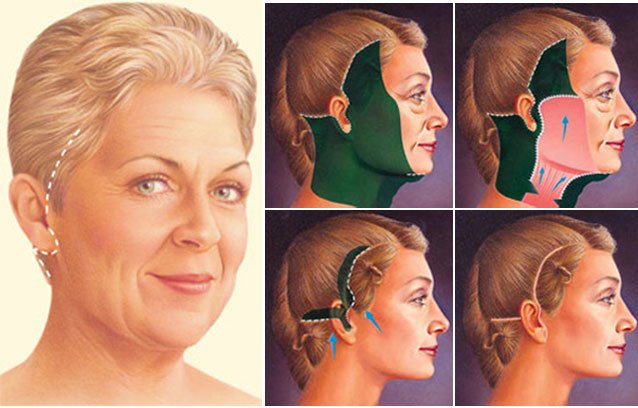
Classic facelift
In the classic facelift, the incisions usually start high within the hair, extend along the natural crease in front of the earlobe, and curve backward behind the ear and into the scalp.
The facelift is usually combined with a neck lift, so a small incision may also be made under the chin, again in a hidden area.
The skin and underlying tissues are lifted and repositioned to their natural (youthful) position, and the excess skin is removed. The incisions are closed with fine sutures, and very thin drains are usually placed to prevent hematoma formation.
Short-scar facelift
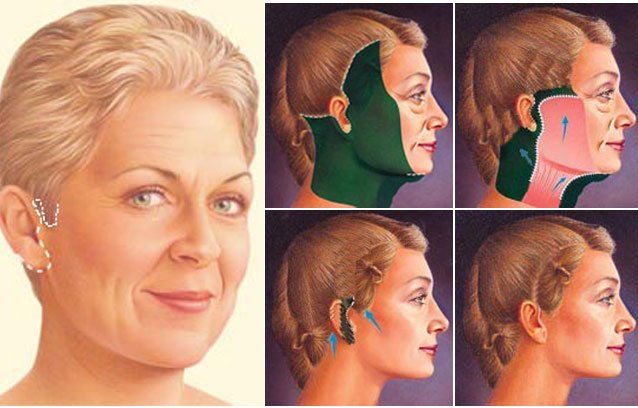
In the short-scar facelift, the incisions usually begin slightly in front of the ear within the sideburn area, extend along the natural crease in front of the earlobe, curve backward, and end just behind the ear.
The skin and underlying tissues are lifted over a smaller area compared to the classic facelift and repositioned to their natural (youthful) position, while any excess skin is removed. The incisions are closed with fine sutures, and thin drains are usually placed to prevent hematoma formation.
Cervical Lifting
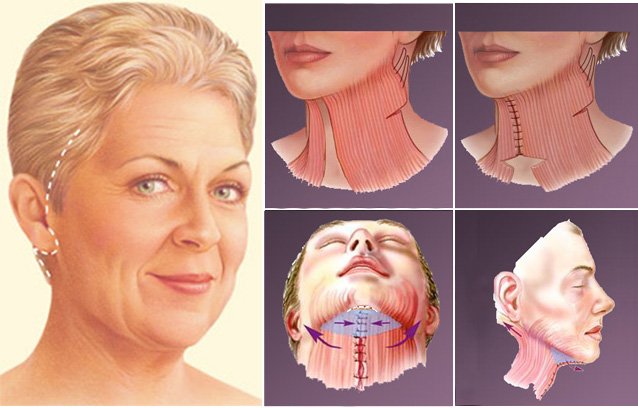
Laxity of the skin and muscles and fat accumulation under the jaw can be corrected with a cervical lift. In a cervical lift, the incision usually begins in front of the earlobe and continues backward just behind the ear.
In many cases with significant platysma laxity (the muscle that normally supports the neck like a corset), a second incision may be made under the chin. The skin is lifted, excess fat is removed, the muscles are tightened and sutured along the midline, and any excess skin is removed. The incision is closed with very fine absorbable sutures, and in some cases drains are placed to prevent hematoma formation.
What should I pay attention to?
Smoking is a particularly aggravating factor for facelift surgery and cessation is recommended at least 2 weeks before and after the procedure. High blood pressure and aspirin intake are also factors that may cause problems and should be discussed prior to surgery.
What should I expect after surgery?
Postoperative pain is mild and is usually managed with analgesics such as Depon or Lonarid. Swelling and some bruising are unavoidable but usually subside within 1–2 weeks. Hospital stay is typically one day. Drains are removed the day after surgery, the dressing is changed, and you can return home.
When can I resume my normal activities?
From the 2nd–3rd day you may gradually return to your activities, but intense physical exercise should be avoided for 2–3 weeks.
From the first days after surgery you may wash freely and wear light make-up, and the use of a good sunscreen (SPF 50+) is recommended for sun protection.
Sutures are usually removed after one week, and full return to activities is expected within 3–4 weeks.
How long do the results last?
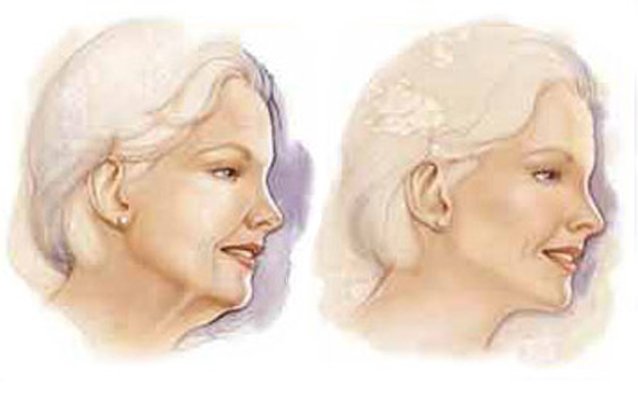
A facelift does not stop aging—it simply “turns back the clock.” However, the result of a facelift will always be present in the sense that you will always look younger than you would have without having had the procedure.
The longevity of a facelift depends on many factors such as skin quality and type, lifestyle, etc. In general, results last 5–10 years.
To book an appointment, please contact us.