
Procedures after chlid birth (Mommy makeover)

After pregnancy, a woman’s body changes and often loses its previous shape. Social factors lead many women to start families after the age of 30, when the body’s ability to recover is reduced, while assisted reproduction has increased the number of twin pregnancies. As a result, the female body today is more vulnerable to pregnancy-related changes than in the past.
What happens to my body?
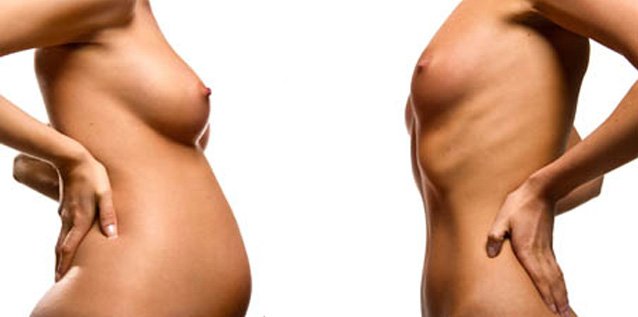
As the abdomen expands to accommodate the baby (or babies), the skin stretches, causing collagen fibers to rupture and leading to stretch marks and skin laxity. The abdominal muscles also relax and often separate laterally (diastasis), a condition that cannot be corrected with exercise alone.
A woman’s metabolism and fat distribution also change during pregnancy, as the body naturally stores energy reserves. This results in persistent abdominal fullness and “love handles” that are often resistant to diet and exercise.
Breastfeeding
Many women worry that breastfeeding will damage their breasts. In reality, it is pregnancy — not breastfeeding — that causes most breast changes. Moreover, breastfeeding offers significant benefits for both mother and child.
During pregnancy, the mammary glands enlarge and replace much of the breast fat, while the skin and supporting ligaments stretch. After childbirth and the completion of breastfeeding, the glands shrink, leaving the breasts deflated and sagging.
How can I restore my body?
All of the changes described above lead many women to feel unhappy with their bodies and to seek the help of plastic surgery in order to restore their appearance.
Abdomen
Some mothers notice mild looseness of the abdominal skin without significant weight gain. In such cases, treatment with Fractional CO₂ Laser can be applied to help tighten the skin of the abdomen.
If, in addition to mild laxity, there is excess fat stored in the abdomen and flanks (“love handles”), this can be permanently removed with liposuction, which at the same time promotes skin tightening.
Another option is mini abdominoplasty, which is suitable for women who have excess fat and skin laxity limited to the area below the navel. In this procedure, liposuction is first performed to remove the fat, followed by excision of the excess skin below the belly button through an incision similar to a cesarean section scar, without repositioning the navel.
Stretch marks and significant abdominal laxity can be treated with full abdominoplasty, which tightens the abdominal muscles and removes the hanging skin below the navel along with the stretch marks. However, if you are planning to have more children, it is advisable to postpone the procedure until your family is complete, as a new pregnancy within the first two years after abdominoplasty may negatively affect the result.
Breast
The breasts can be restored with a lift (mastopexy), with or without the use of silicone implants (to restore volume if the breasts have “deflated”). However, you should wait at least six months after the end of breastfeeding before undergoing breast surgery, so that the breasts have returned to their normal condition.
These procedures can be performed individually or combined as part of a Mommy Makeover, following a thorough consultation to determine the best approach for each patient.
To book an appointment, please contact us.