

Gynecomastia

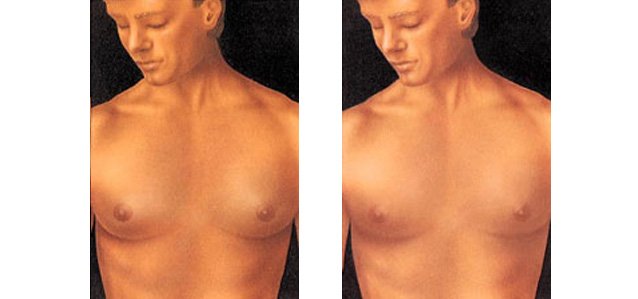
Gynecomastia is the enlargement of male breast tissue. It is a pathological condition most commonly observed during adolescence and represents a developmental abnormality. Although it is not often discussed, gynecomastia is quite common, affecting up to 60% of adolescent boys. It may involve one breast or both. Although various medications and medical conditions have been implicated, in the majority of cases the cause is unknown, and the condition is classified as idiopathic.
Gynecomastia may cause psychological distress in adolescents, affecting body image and self-confidence. In such cases, surgical correction can provide significant improvement.
Diagnosis is relatively straightforward and includes breast ultrasound as well as blood tests to rule out underlying medical conditions.
How is gynecomastia corrected?
Correction of gynecomastia is performed under general anesthesia.
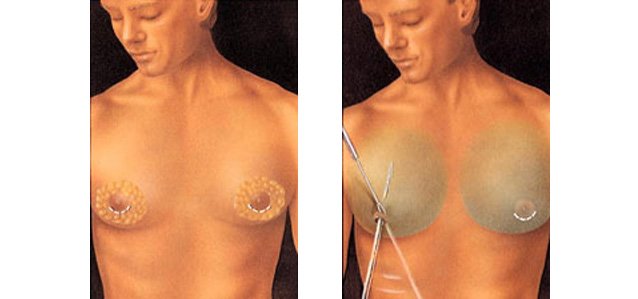
In mild to moderate cases without significant excess skin, liposuction alone may be sufficient to restore a normal chest contour.
In cases with larger breasts and significant excess skin, liposuction is combined with surgical removal of part of the glandular tissue through a small incision along the edge of the areola, and sometimes with removal of excess skin around the nipple.
Σε ορισμένες περιπτώσεις με εξαιρετικά μεγάλη περίσσεια δέρματος και μαζικού αδένα μπορεί να χρειαστεί πολύ πιο εκτεταμένη επέμβαση, ώστε να διορθωθεί αποτελεσματικά το πρόβλημα
What should I expect after surgery?
The procedure lasts approximately 1 to 1.5 hours, and in most cases you can return home the same afternoon. Pain is usually mild, often described as a burning sensation, lasts 2–3 days, and is easily managed with simple pain medication.
Μετεγχειρητικά θα παρατηρήσετε μώλωπες (μελανιές) και οίδημα. Για τον περιορισμό τους, καθώς και για την πρόληψη δημιουργίας αιματώματος συνιστάται η χρήση ενός ειδικού πιεστικού γιλέκου για 3-4 εβδομάδες.Σε μερικές περιπτώσεις, σε ασθενείς με μεγάλους μαστούς, όπου απαιτείται και χειρουργική αφαίρεση, μπορεί να τοποθετηθεί από μία παροχέτευση σε κάθε πλευρά για την αποφυγή δημιουργίας αιματώματος. Οι παροχετεύσεις αφαιρούνται συνήθως την επόμενη μέρα.
When can I return to my activities?
From the first day after surgery, you may move around freely and perform light activities, although household tasks should be avoided for one week.
Return to light work is usually possible within 1–2 days. Exercise is typically allowed after 2–3 weeks, and full return to normal activities is expected after about one month.
To book an appointment, please contact us.