

Breast Lift (Mastopexy)

Many women notice after pregnancy or breastfeeding that their breasts lose shape and firmness and begin to sag.
The same effect can occur even without pregnancy, due to gravity and major weight fluctuations, as the skin gradually loses its elasticity over time.
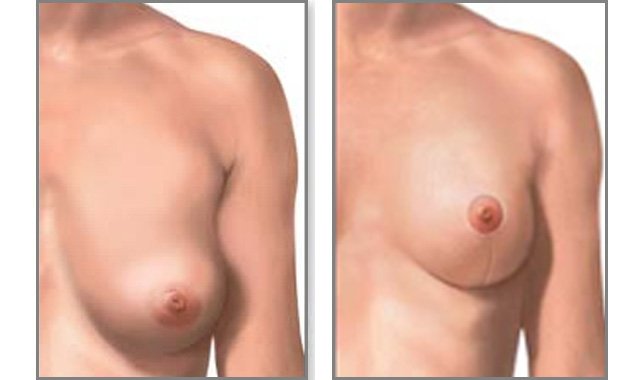
A breast lift, or mastopexy, aims to restore the shape and firmness of the breasts and reposition them to a higher, more youthful position without changing their volume. It can also reduce the size of the areola (the darker skin around the nipple).
In some cases, when sagging is minimal, the appearance of the breasts can be improved with breast augmentation using silicone implants alone, without a lift. In other cases, when sagging is combined with volume loss (as often happens after breastfeeding), a combination of lift and augmentation with implants may be required.
Are special tests required before surgery?
Before any breast surgery, the breasts must be evaluated to identify any potential issues. Depending on age and family history, a breast ultrasound, mammogram, or both may be required.
How is a breast lift performed?
Each patient is unique, and therefore the surgical approach may vary.
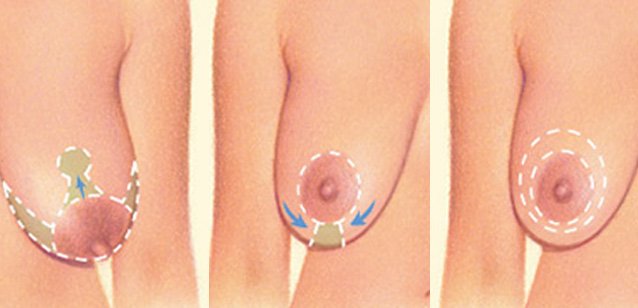
In most cases, an incision is made around the areola, a second incision runs vertically from the areola down to the crease beneath the breast, and a third horizontal incision is placed along the inframammary fold, forming an inverted “T.” Excess skin is removed—often together with a portion of the areola if it is large—without removing breast tissue. The nipple and areola are repositioned higher, and the skin is closed around the breast, lifting it into a more natural position.
Patients with smaller breasts and moderate sagging may be suitable for techniques involving smaller incisions. The horizontal incision in the breast crease may be shortened or avoided altogether.
In some cases where the main issue is a low nipple position with minimal lower breast sagging, the incision may be limited to around the areola only.
If there is significant volume loss, a breast lift can be combined with breast augmentation using silicone implants. In cases of very mild sagging, augmentation alone may be sufficient.
The sutures used are typically internal and absorbable. In rare cases, a drain may be placed on each side to prevent fluid or blood accumulation.
What should I expect after surgery?
The procedure lasts about 2–2.5 hours, and you can usually go home the same day.
As mentioned, the stitches are internal and absorbable. Postoperative discomfort is generally mild, more like a stinging sensation, and is easily managed with simple pain relievers such as paracetamol or similar medications.
After surgery, you will need to wear a comfortable supportive bra (sports bra or nursing bra without underwire) for about one month. Initially, some swelling will occur and the breasts may appear slightly higher than desired. Over the next 2–3 months, the swelling gradually subsides and the breasts settle into their natural shape.
Scars will initially appear red and somewhat firm, then gradually soften, fade to pink, and eventually become pale and barely noticeable. This scar maturation process takes several months but can be accelerated with daily massage and special silicone sheets.
Temporary numbness around the nipple is common and usually resolves within a few months. Since the procedure affects only the skin and does not interfere with the milk ducts, breastfeeding ability is generally not affected. However, future pregnancy and breastfeeding may reduce the longevity of the results. It is also important to note that results are not permanent—gravity, aging, and weight changes can eventually lead to renewed sagging.
What complications may occur?
Mastopexy is generally a straightforward, safe procedure with few complications. The most common issues involve minor wound infections caused by bacteria normally present in the milk ducts. These may slightly delay healing but rarely affect the final result. Rarely, postoperative bleeding may occur and require treatment in the operating room. Scarring itself is not considered a complication and, as mentioned, typically fades significantly over time.
When can I return to normal activities?
You may move around freely from the first day after surgery, but it is advisable to avoid household tasks for about one week. Sexual activity should also be avoided for at least one week. Return to light work is usually recommended after one week, while full return to normal activities is expected after about one month.
To book an appointment, please contact us.