
Autologous Mesotherapy (PRP)

Autologous mesotherapy with platelet-rich plasma – Platelet Rich Plasma (PRP) as it is scientifically known – is an innovative anti-aging treatment that harnesses the body’s own healing and regenerative properties for skin rejuvenation.
How does autologous mesotherapy work?
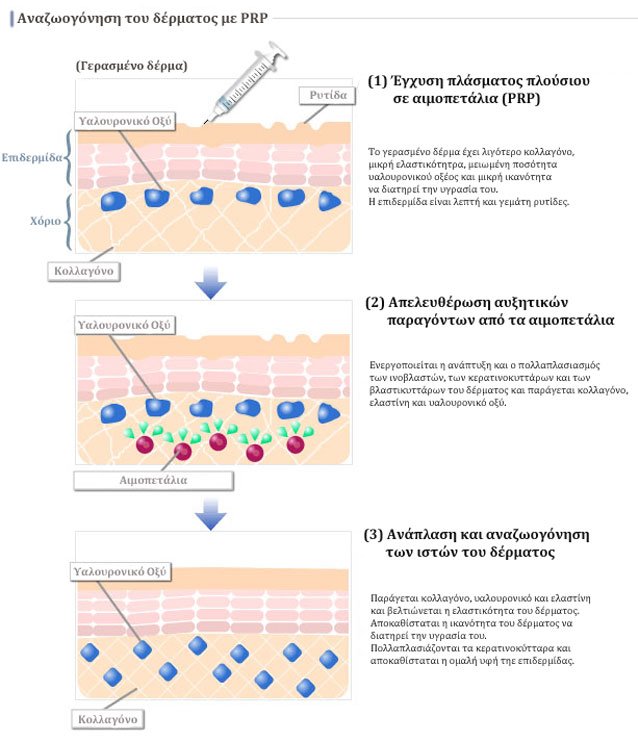
Platelets are blood cells that play an important role in wound healing and tissue regeneration through the release of growth factors. These growth factors promote the proliferation of fibroblasts and keratinocytes—the cells responsible for producing collagen, hyaluronic acid, elastin, and keratin—activate the skin’s stem cells, and also play a significant role in angiogenesis.
This entire process results in skin rejuvenation, increased thickness and improved texture of the epidermis, improvement of fine wrinkles, and overall reversal of the skin aging process.
Has this treatment been tested?
Platelet-rich plasma therapy has been successfully used for many years in orthopedics for the healing of musculoskeletal injuries, as well as in reconstructive surgery for the treatment of difficult wounds. A well-known example is the top tennis player Rafael Nadal, who underwent PRP therapy to treat tendonitis in his left knee, allowing him to return to competition and win three titles. Another striking example is the world-renowned golfer Tiger Woods, who received PRP therapy on his knee in 2008.
Where is it applied?
Beyond orthopedics and reconstructive surgery, PRP therapy is widely used in aesthetic medicine as an anti-aging and skin rejuvenation treatment, for the treatment of acne scars and stretch marks, as well as for hair loss—slowing hair shedding and strengthening hair follicles.
How is it performed?
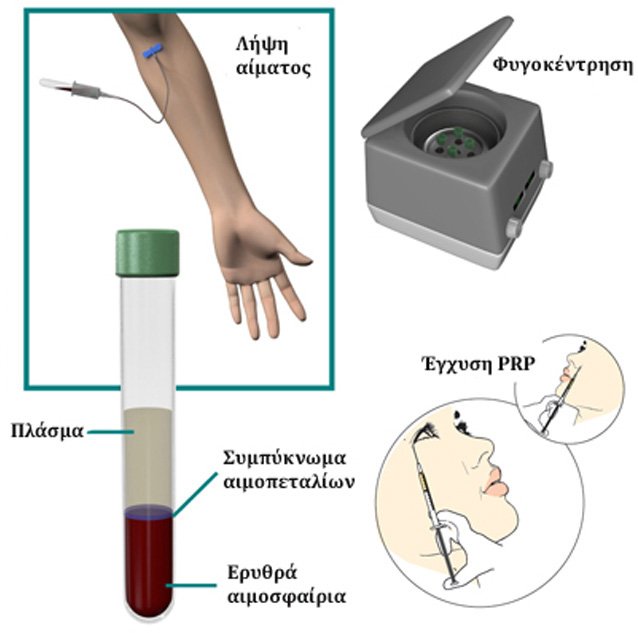
The treatment is extremely simple. A small amount of blood is drawn from the patient, similar to a routine blood test, and then specially processed through centrifugation to isolate plasma containing nearly all the platelets. The platelet-rich plasma is then injected into the skin using an extremely fine needle. The platelets gradually release their growth factors within the skin and activate the body’s natural healing mechanisms.
Is the treatment painful?
The treatment is almost painless, as a special anesthetic cream is applied to the skin for about one hour beforehand, making the injections barely noticeable.
How long does the treatment take?
The entire procedure lasts approximately 1 hour and 30 minutes, including the one hour during which the anesthetic cream is applied. The actual treatment time is about 20–30 minutes.
Are there side effects?
PRP therapy has no significant side effects, as it is completely natural. Since it is derived from the patient’s own blood, it contains no foreign substances that could trigger allergic or adverse reactions.
How often should it be performed and how long do the results last?
It is recommended to initially undergo the treatment twice within a period of 2–3 months to achieve maximum activation of the body’s healing mechanisms. After that, maintenance treatments are recommended 1–2 times per year.
To book an appointment, please contact us.